
Driving Community
Resilience Through Fresh
Food
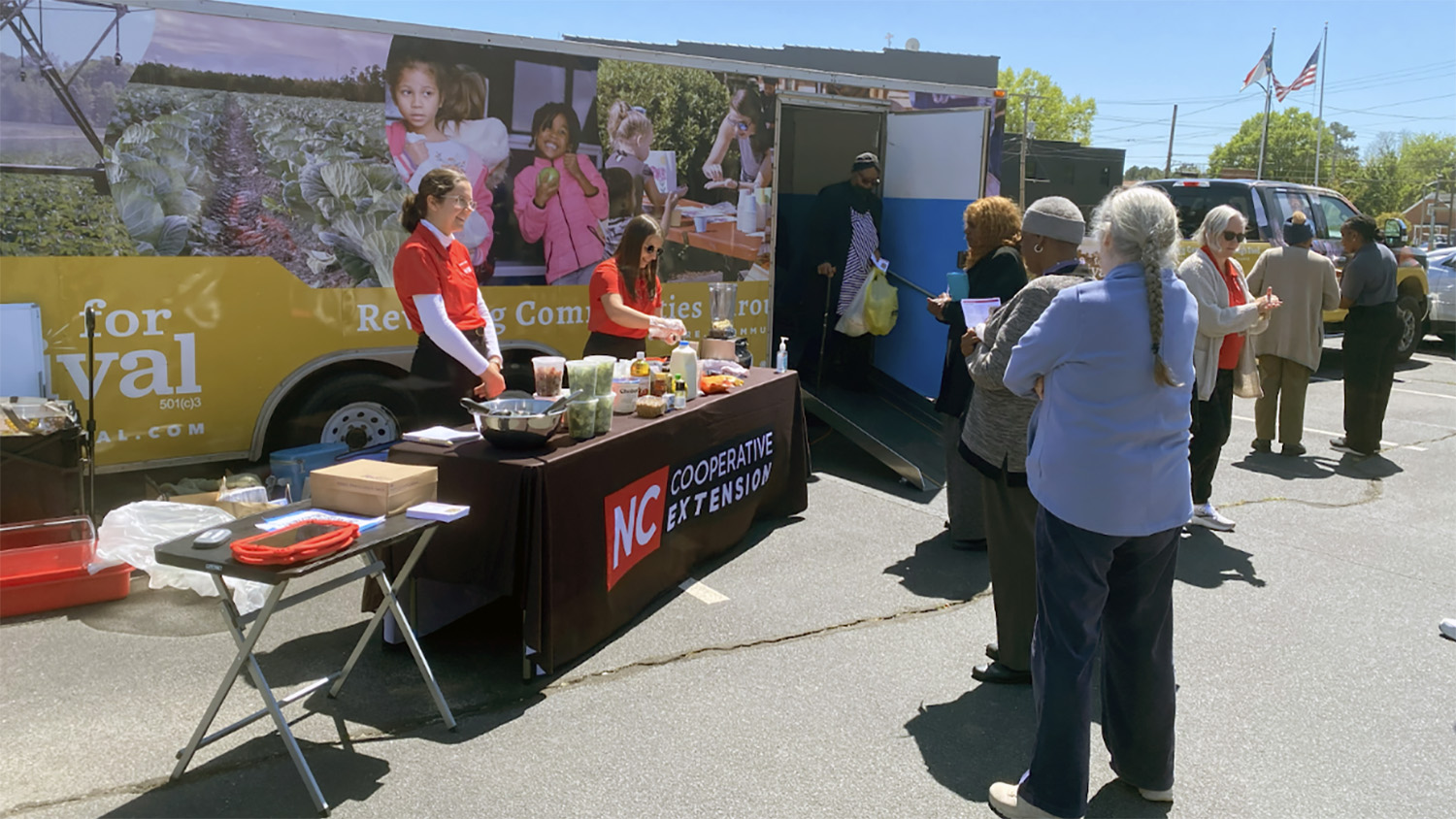
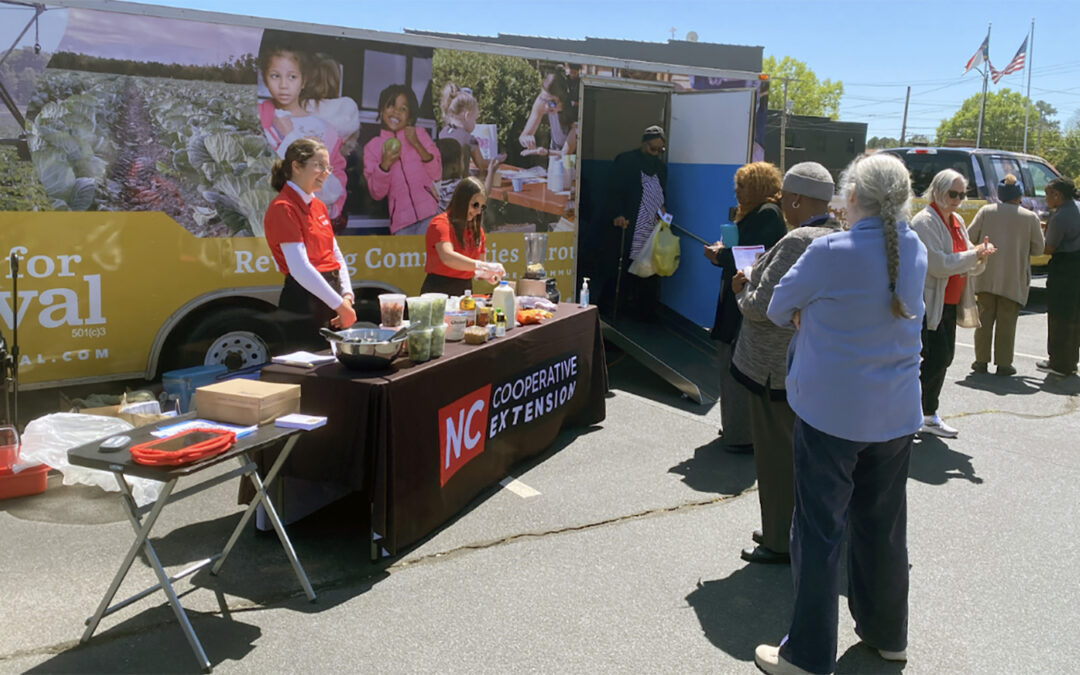
| NC State Extension and the nonprofit Ripe for Revival have partnered to expand a mobile produce market program.
For many rural North Carolina families, finding affordable, fresh produce isn’t just an inconvenience — it’s a challenge that impacts health and well-being. Limited grocery store options, higher prices at small markets, and long travel distances mean that fresh fruits and vegetables are often out of reach.
NC State Extension is working to change that. Through a new partnership with Ripe for Revival, a Rocky Mount–based nonprofit, Extension is helping bring a mobile produce market directly to communities in need — and putting healthy food within reach for hundreds of residents.
Thanks to combined funding from the Danone Institute North America (DINA) Sustainable Food Systems grant and NC State’s Global One Health Seed Grant, the initiative will expand into eight rural counties from July 2025 through July 2027. The program will provide eligible participants with monthly $20 vouchers to redeem at Ripe for Revival’s mobile market — a retrofitted school bus or trailer stocked with locally grown produce, eggs, dairy and meats.
“Our goal is to make fresh, healthy foods more affordable and accessible while reducing the stigma often associated with food assistance programs,” says Basheerah Enahora, assistant professor and nutrition Extension specialist in the Department of Agricultural and Human Sciences, who leads the project. “We’re not just feeding families — we’re strengthening community health and supporting North Carolina farmers.”
Growing Access to Fresh Foods
The mobile market is more than just a grocery stop — it’s a community hub. Ripe for Revival purchases surplus crops from North Carolina farmers and sells them at prices about 20% below retail. By sourcing locally, the market helps keep farm income in the region while offering families fresher, more affordable food.
Through NC State Extension’s involvement, the mobile market experience will also feature live cooking demonstrations, recipe cards, and educational signage highlighting the benefits of healthy eating. Each county Extension office will help connect eligible participants to the program, with vouchers distributed through existing Extension programs such as the Expanded Food and Nutrition Education Program (EFNEP) and SNAP-Ed (Supplemental Nutrition Assistance Program-Education).
Voucher recipients will be able to shop once a month for three consecutive months, choosing from a variety of fresh produce and other essentials.
“The flexibility and dignity of choice are key,” Enahora says. “Participants select the foods that work best for their families, without feeling singled out.”
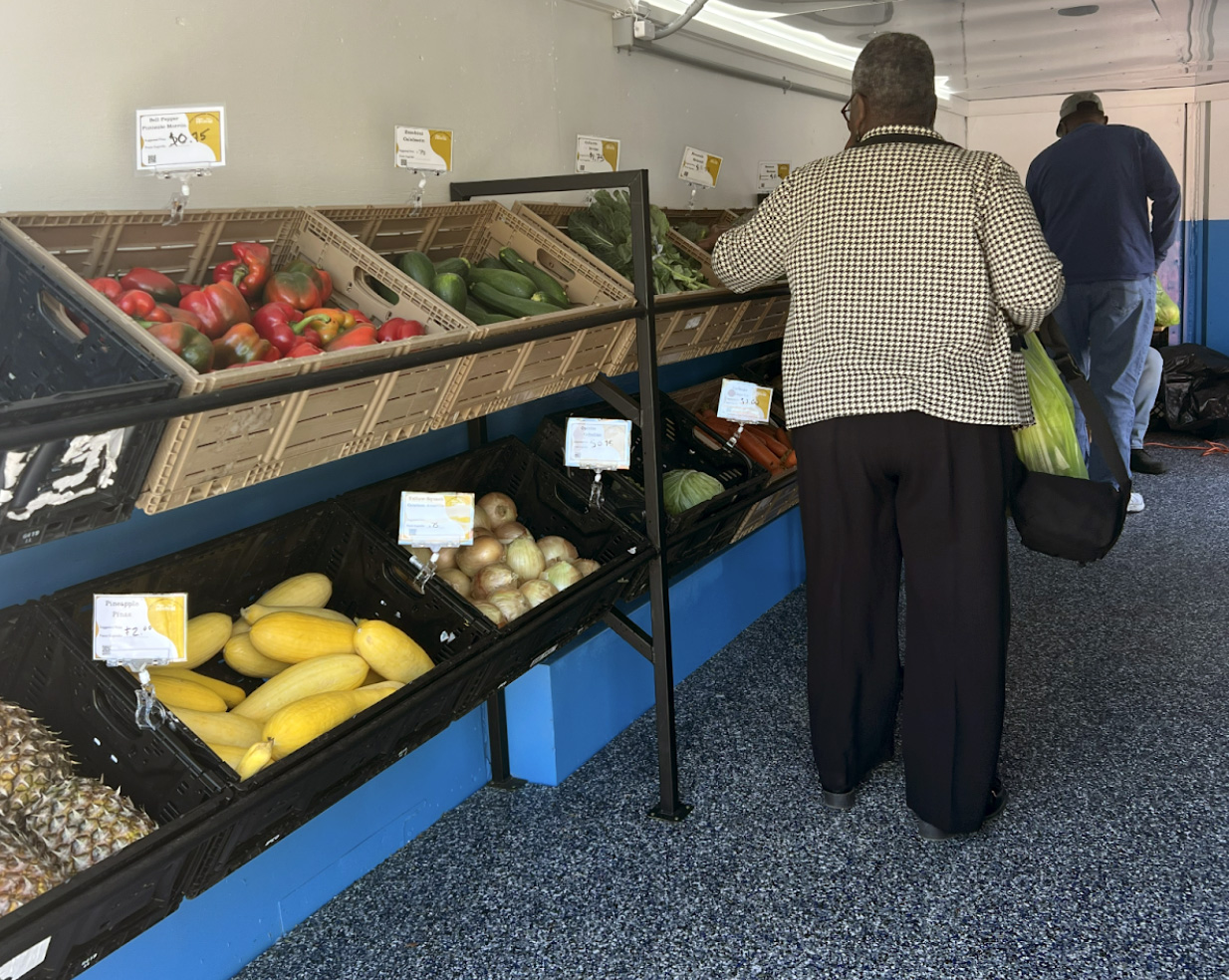
| Eligible residents from select counties use shopping vouchers to purchase fresh produce from the mobile market.
Ripe for Revival has been bringing fresh food to underserved communities since 2022, with its mobile market currently serving 23 counties. NC State Extension began collaborating with the nonprofit in late 2024, piloting the program in Washington County through the CDC-funded Healthy Roots initiative. The very first market there drew 80 patrons and distributed more than 300 pounds of produce in a single day. The enthusiastic community response — coupled with support from local partners — allowed Ripe for Revival to establish a permanent weekly market in Washington County for 2025.
Ripe for Revival has been bringing fresh food to underserved communities since 2022, with its mobile market currently serving 23 counties. NC State Extension began collaborating with the nonprofit in late 2024, piloting the program in Washington County through the CDC-funded Healthy Roots initiative. The very first market there drew 80 patrons and distributed more than 300 pounds of produce in a single day. The enthusiastic community response — coupled with support from local partners — allowed Ripe for Revival to establish a permanent weekly market in Washington County for 2025.
With DINA and Global One Health funding, the program will expand into Bertie, Halifax, Hertford, Lenoir, Northampton, and Washington counties, along with Warren and Jones counties, supported through the seed grant. Over the next two years, the team will track the program’s impact by collecting data at the start, midpoint, and conclusion of each participant’s involvement.
Measurements will include fruit and vegetable intake, food and nutrition security status, overall dietary behaviors, blood pressure, height and weight, along with voucher redemption rates and purchasing patterns. This research will help determine how effective the mobile market and voucher program are in improving nutrition and reducing food insecurity, which could inform similar efforts statewide.

| Enahora with investigators from East Carolina University and Ripe for Revival working on the DINA grant.
Cultivating a Resilient Plan
The mobile market model addresses multiple challenges at once, making it a powerful tool for strengthening both farmers and families. By offering discounted prices and monthly vouchers, it reduces the financial burden of buying healthy foods. At the same time, purchasing directly from North Carolina farmers helps sustain local agriculture and supports the state’s economy.
“This program is a win-win,” Enahora explains. “Families gain access to healthier food, and farmers have a reliable market for their products. It’s about creating a more resilient food system for everyone.”
Enahora envisions this as just the beginning. “Our hope is that the model we build here can be replicated in other rural communities, not just in North Carolina but across the country,” she says. “By bringing healthy foods directly to where people live, we’re removing barriers and investing in long-term community health.”
With a clear plan, strong partnerships, and a shared mission, NC State Extension and Ripe for Revival are working to ensure that fresh, local food is not a luxury — but a standard — for every North Carolina family.